What “butterfly” actually means for a pillow
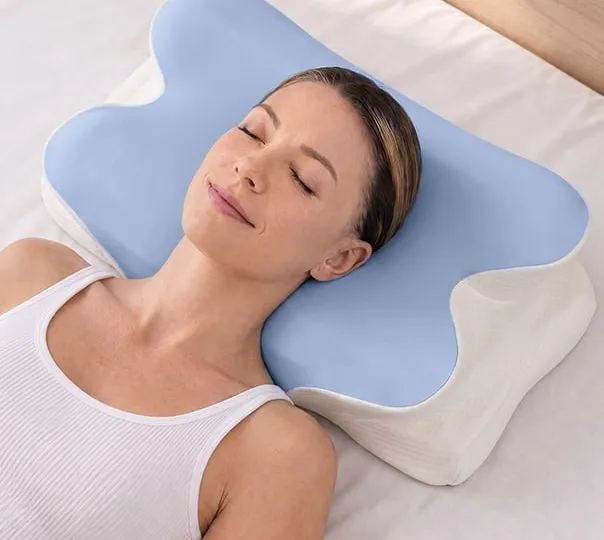
A butterfly pillow gets its name from its silhouette: a central body that supports the head, with two raised “wings” that flare out on either side for the shoulders and neck. Laid flat, it looks roughly like a butterfly with its wings spread — hence the name. It’s a design pattern, not a brand: several manufacturers sell their own version of a butterfly-shaped pillow, each with its own material and construction, so “butterfly pillow” describes a shape category, not one specific product.
How the shape is supposed to help
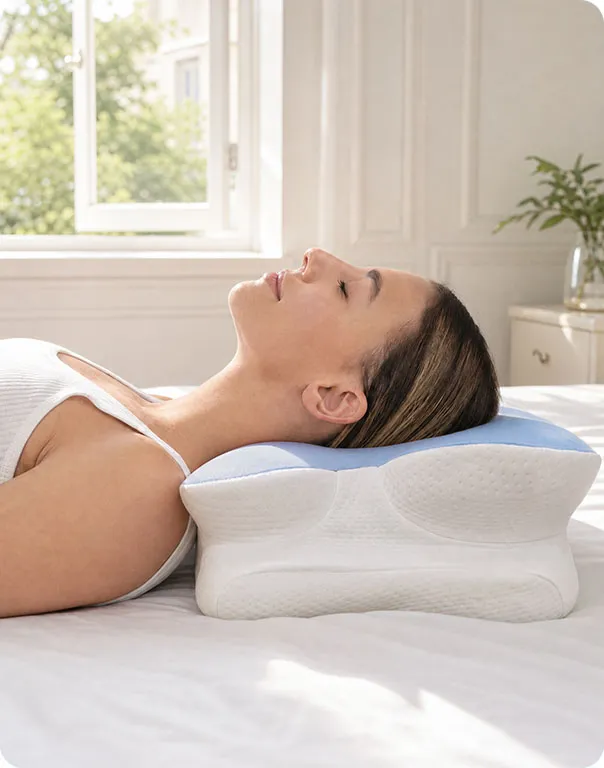
The wings are meant to fill the gap between your shoulder and your ear when you’re lying on your side — the same job a rolled-up towel does in old-school posture advice — so the neck isn’t left unsupported during the night. The dip in the middle is meant to cradle the head at a slightly lower level than the wings, keeping the spine closer to a neutral line whether you’re on your side, your back, or moving between positions through the night. That’s the theory behind the shape; how well it works in practice depends on the specific pillow’s firmness, wing height, and your own body (shoulder width, usual sleep position) — not the shape alone.
Who it’s likely to help — and who it isn’t for
- Side and back sleepers are the most common fit for this shape, since the wings have shoulders and neck to actually support in those positions.
- Stomach sleepers tend to get less benefit — the wing structure doesn’t do much face-down, and a lower-loft pillow usually works better for that position regardless of shape.
- Anyone with a diagnosed sleep apnea condition, or a clinical suspicion of it, shouldn’t treat any pillow — butterfly-shaped or not — as a fix. That needs a medical evaluation, not a shape change, no matter how the pillow is marketed.
What to check before buying one
- Material — most butterfly pillows use memory foam (solid or shredded) for the wings; check whether the cover is specifically described as breathable/cooling if you tend to sleep hot.
- Wing height and firmness — a taller or firmer wing supports broader shoulders better. There’s no universal “right” height here — it depends on your build, not on which brand markets it hardest.
- Return policy and trial length — fit is personal, and you generally can’t test wing height in a store before buying online. A real return window matters more for this shape than it does for a flat rectangular pillow.
- What’s actually verified vs. what’s marketed — claims like “eliminates neck pain” or “stops snoring” are marketing language, not medical claims. A more supportive pillow can make sleep posture more comfortable, but it doesn’t treat an underlying condition, and no credible seller should imply otherwise.
A real example: the Melara Max
The Melara Max is the butterfly-shaped pillow we’ve researched in depth for this site — memory foam wings, a cooling-effect cover, and a bundled cylindrical neck roll, at US$64.95 with a 30-night satisfaction guarantee backing the purchase. We cover the full breakdown — materials, what the manufacturer verifies versus what it just claims, real price and return terms, and a full FAQ — in the complete Melara Max review, the deep dive on the one option in this shape category we’ve researched start to finish.
Is a butterfly pillow worth it?
If you’re a side or back sleeper dealing with shoulder or neck discomfort and your current pillow is flat or overly soft, the shape is a reasonable, low-risk thing to try — especially backed by a real return window. It’s not a treatment for any diagnosed condition, and the specific pillow you choose matters more than the shape alone. See the Melara Max review for the one option we’ve researched start to finish.
Also read our full review:
Melara Max Pillow Review 2026: Who This Butterfly Pillow Fits (and Who It Doesn't)
Affiliate disclosure
This content contains affiliate links. If you buy through one of these links, we may earn a commission from the company selling the product, at no extra cost to you. This commercial relationship never influences our editorial review — see our methodology.
Also read our health disclaimer and the full affiliate disclosure page.